
Last updated October 15, 2026
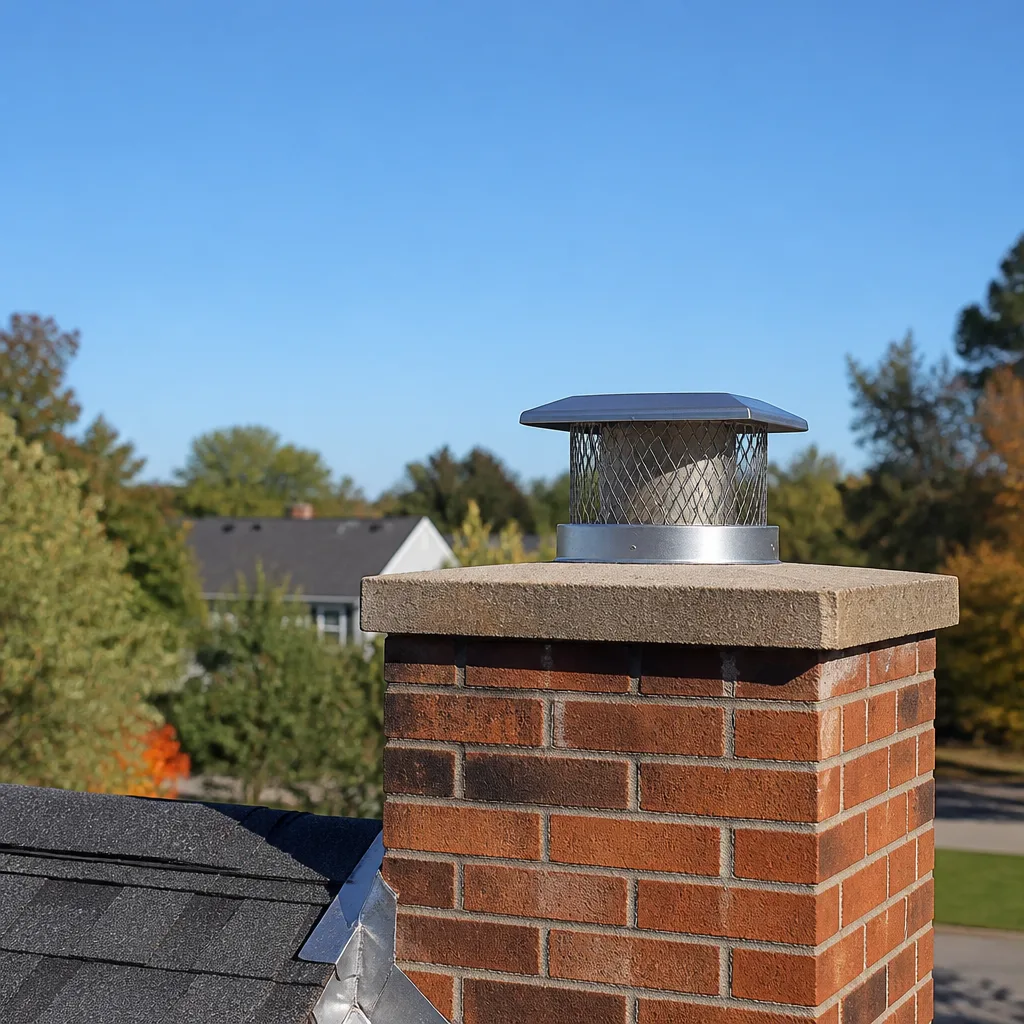 Sweep & inspection
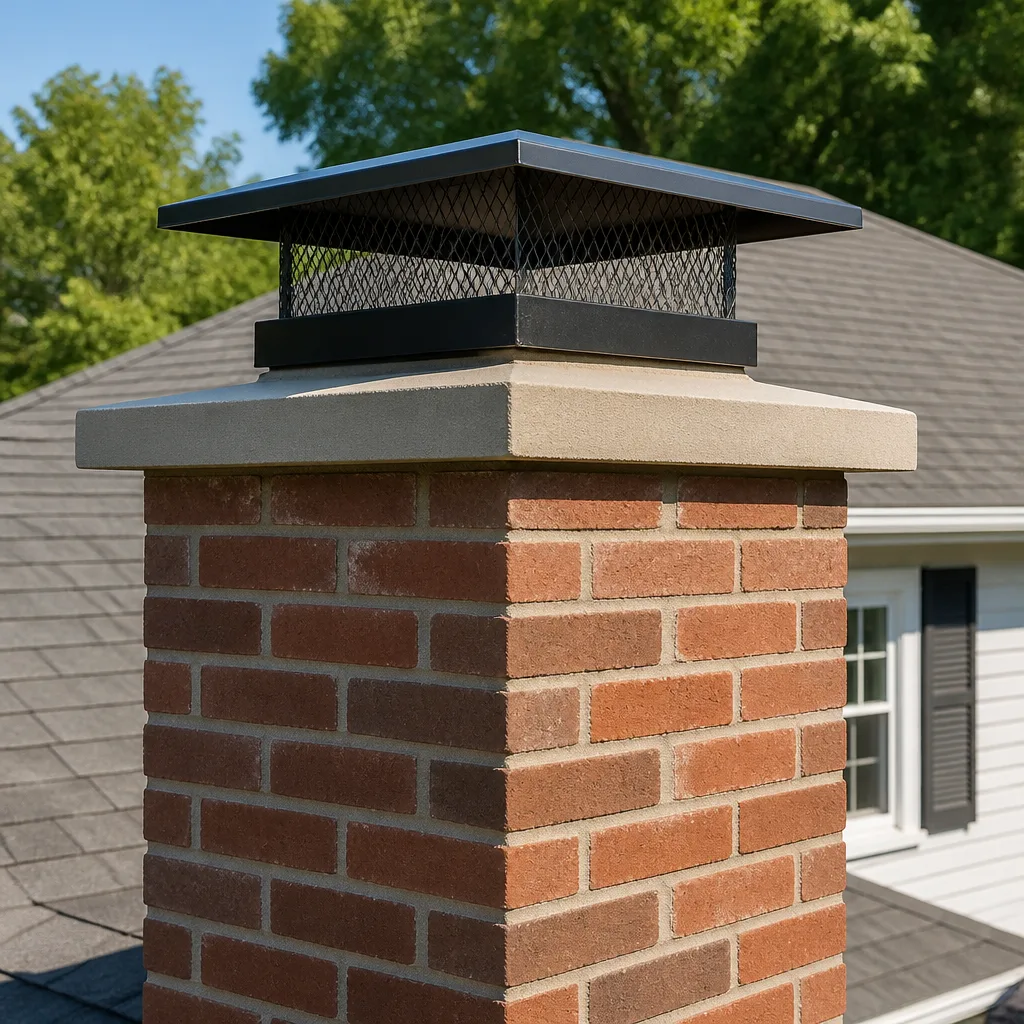 Caps & crowns
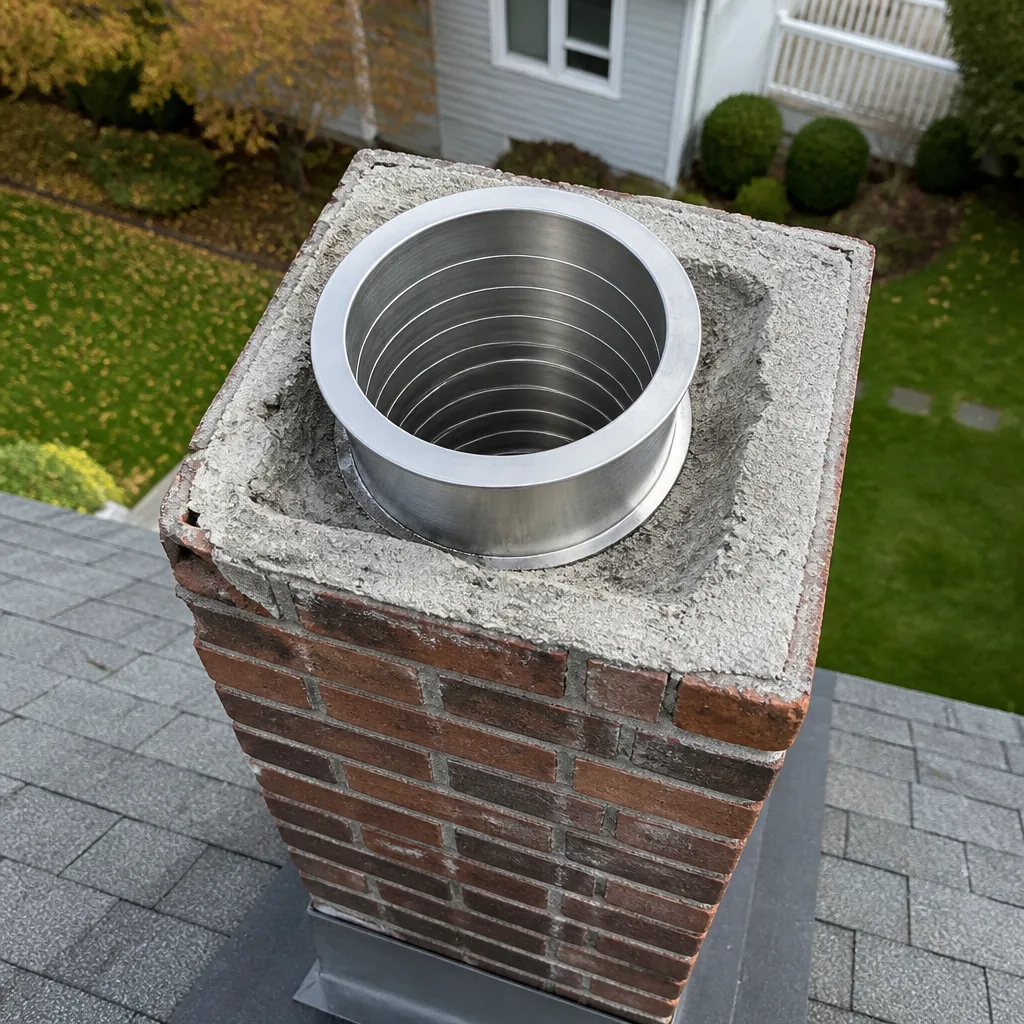 Flue relining
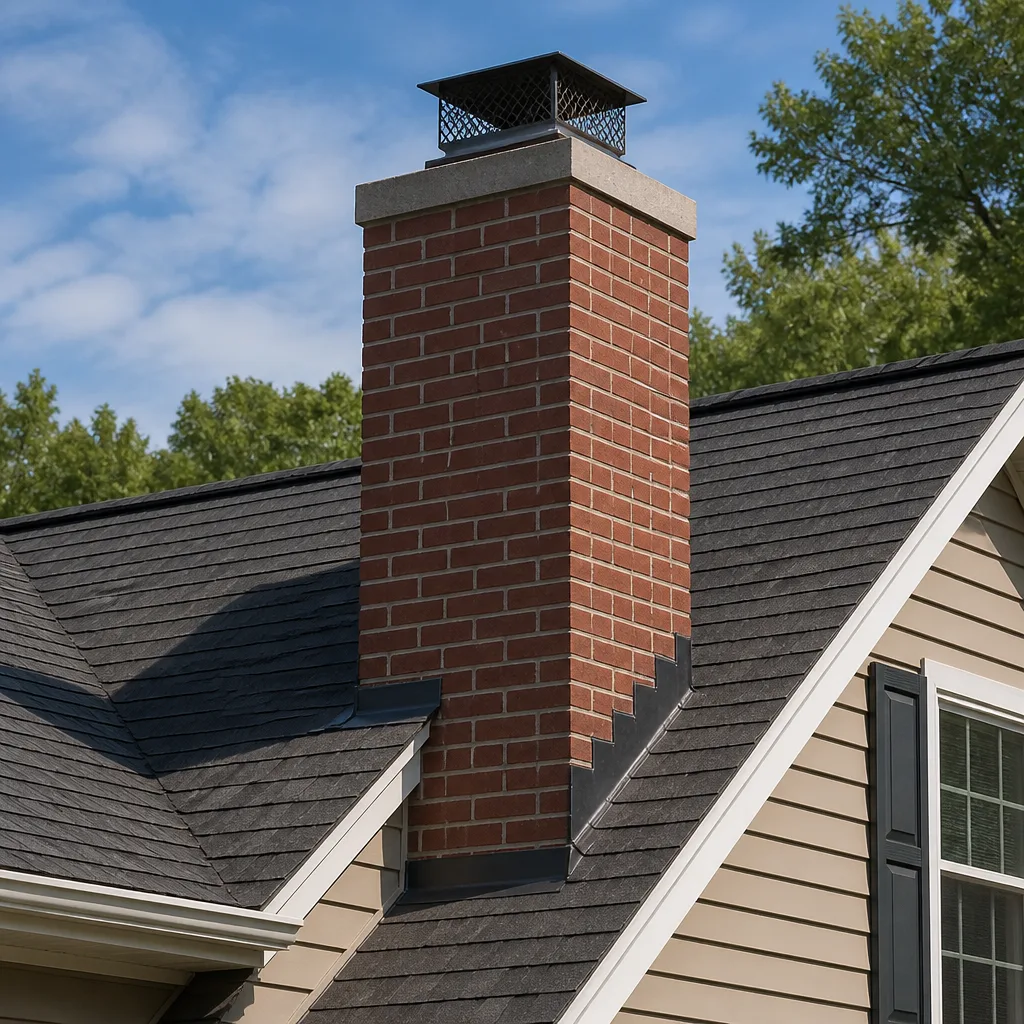 Masonry repair
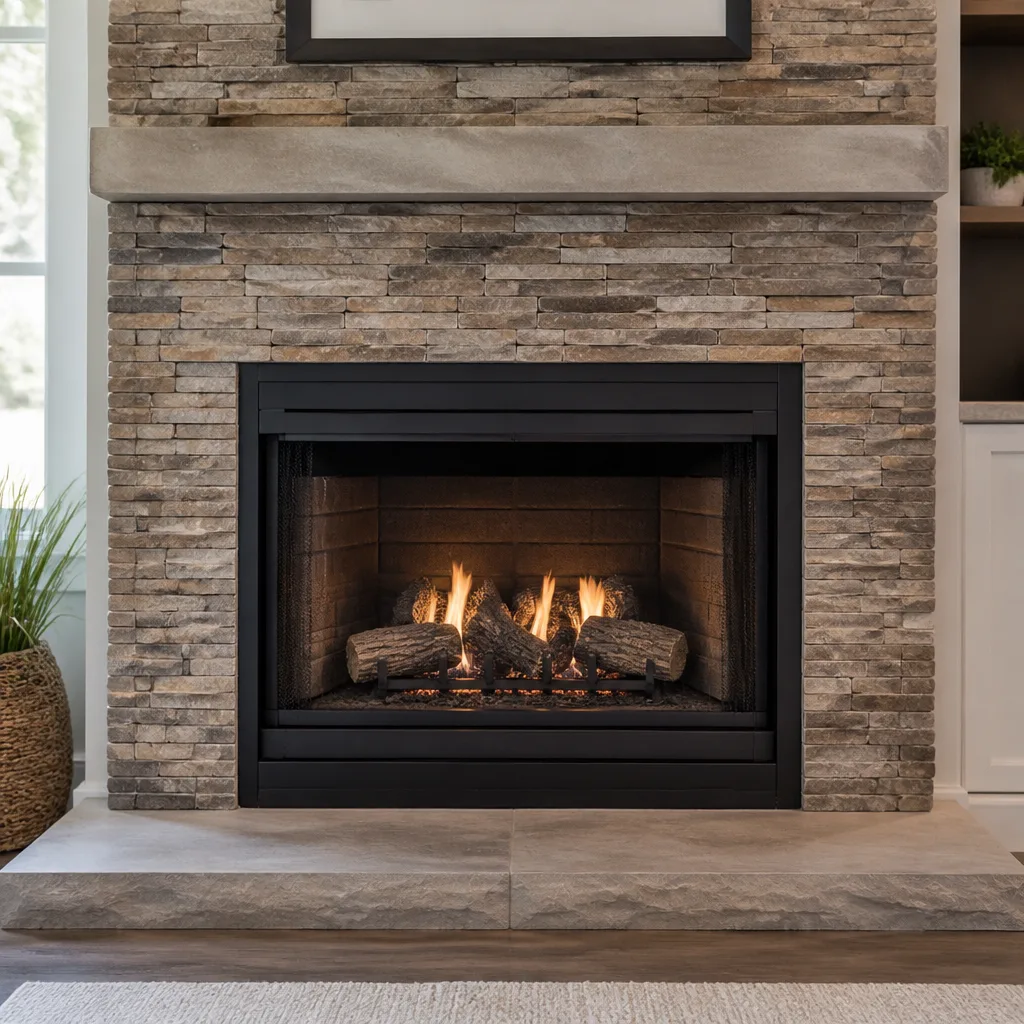 Gas fireplace service
Level 1 sweep and inspection to the NFPA 211 annual standard - flue, crown, cap, and flashing checked and photographed
Chimney sweep logs do not sweep chimneys. They loosen some creosote - which then falls where a brush and vacuum still have to collect it.
The Complete Guide to Chimney Cleaning in Miami
Most chimney guides are written for climates that use their fireplaces 60-plus nights a year. Miami averages fewer than 10. That single fact changes everything about how your chimney should be maintained, inspected, and cleaned. Your chimney’s biggest enemy in Miami isn’t creosote. It’s what grows and hardens when moisture, salt, and heat meet inside a flue that almost never gets hot enough to self-clear. This guide maps those Miami-specific failure patterns against what a proper cleaning actually addresses, service stop by service stop, and you can find more guides & resources on our blog.
Styles & brands we work with
Quick Answer
Chimney cleaning in Miami typically costs between $189 and $325 for a standard sweep and runs 45 to 90 minutes. Because Miami fireplaces see fewer than 10 burns per year, the real threat isn’t soot buildup – it’s mold, pest nesting, efflorescence, and salt-driven mortar deterioration. A proper Miami chimney cleaning should include a flue inspection, smoke chamber access, firebox check, and cap condition report, all itemized in writing before any work begins.
Table of Contents
- Why Miami Chimneys Fail Differently
- What a Miami Chimney Cleaning Actually Covers
- The Three Levels of Chimney Inspection and Which One Your Miami Home Needs
- How Salt Air Accelerates Chimney Deterioration Within 5 Miles of the Coast
- Miami Chimney Cleaning Prices in 2026, Broken Down by Service
- What a Written Scope of Work Must Itemize Before a Sweep Starts
- Mold, Efflorescence, and Pests: The Humid Climate Trinity
- Common Mistakes to Avoid
- When to Call a Professional
- Frequently Asked Questions
- The Bottom Line
Why Miami Chimneys Fail Differently
The conventional chimney advice online assumes a simple equation: burn wood, get creosote, clean the creosote. But a Miami fireplace burning fewer than 10 nights a year produces almost no creosote – yet Miami chimneys still deteriorate, sometimes faster than chimneys in Minnesota or Vermont. Why? Because the failure vector in Miami is moisture, and Miami has plenty of it.
Ambient humidity in Miami sits above 70 percent for most of the year. That humid air rises into an unused flue, condenses on the cooler masonry and liner surfaces, and settles. The result is a damp, dark, stagnant cavity – which is exactly the environment mold and mildew need. We’ve pulled mold colonies from Miami flues that had not seen a fire in three years. The homeowner assumed no fires meant no maintenance. The opposite was true.
Then there’s the heat. Miami’s daily summer cycle bakes the exterior of the chimney while the interior stays comparatively cool. That thermal differential causes micro-expansion and contraction cycles in the masonry and the liner. Over a decade, that repeated stress opens hairline cracks. Cracks admit more moisture. More moisture produces efflorescence – the white, powdery mineral deposits you see on chimney brick. Efflorescence is not a cosmetic flaw. It’s visible evidence that water is moving through the masonry, dissolving minerals and leaving them behind as it evaporates. Left unaddressed, that water migration spalls bricks and crumbles mortar joints.
Pests compound the problem. An unused Miami chimney is prime real estate for roof rats, squirrels, and chimney swifts. In our experience across Miami-Dade, we regularly find nesting material in fireboxes that have gone a season without a cap check. Nesting sits in the flue, traps moisture against the liner, and becomes a flashpoint if a fire is ever lit.
The takeaway: a low-use chimney in Miami is not a maintenance-free chimney. It is a chimney that needs a different kind of attention – moisture-driven, pest-aware, and inspection-first. This guide is built around that reality. If you need a full sweep now, our Chimney Sweep in Miami page has the service-by-service breakdown.
What a Miami Chimney Cleaning Actually Covers
A proper chimney cleaning in Miami is not a guy with a brush. It is a staged, documented process that covers the entire chimney system from firebox to cap. Here’s what should happen, step by step, in the order a disciplined crew follows.
The Sweep Sequence
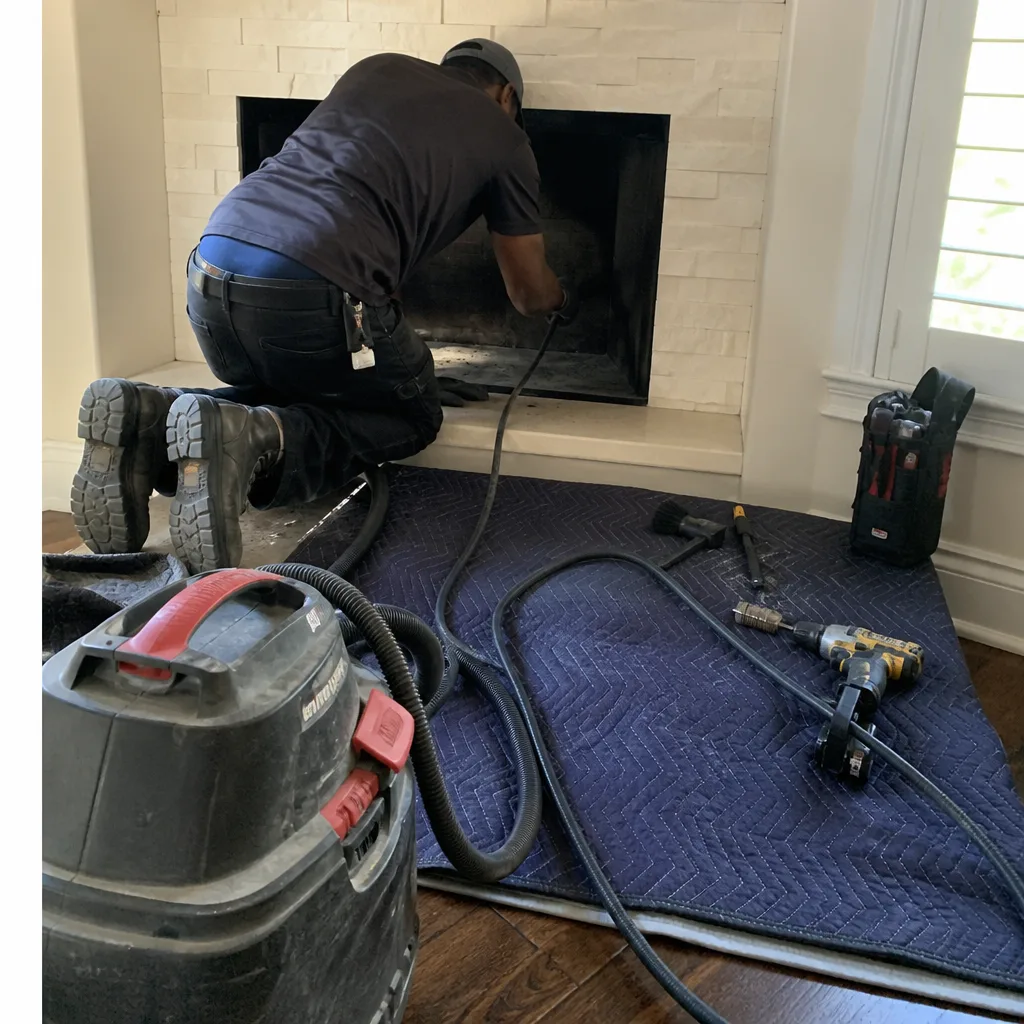
- Pre-job inspection and drop cloths. Before any tool comes off the truck, the technician walks the fireplace and surrounds, checks for loose brick, signs of water intrusion, and sets drop cloths from the fireplace to the door. Mess containment is part of the job, not an add-on.
- Flue and smoke chamber brushing. The flue is brushed from the top down or bottom up depending on cap access. The smoke chamber – the angled area above the firebox where smoke compresses before entering the flue – is brushed and vacuumed. This area is frequently skipped in cheap sweeps because it’s awkward to access. It matters in Miami, because it’s where mold spores and rat droppings accumulate.
- Firebox debris removal. Ash, nesting material, and any masonry chips are removed and bagged.
- Cap and mesh screen check. The technician checks that the cap is secure and the mesh is intact. In Miami, caps take a beating from wind-driven rain and hurricane season. A bent or missing cap is an open invitation to rain, rats, and swifts.
- Camera inspection of the liner. With the flue clean, a bore-scope camera runs the full length of the flue liner. The video recording becomes part of the service record. Any cracks, gaps, spalling, or buildup issues are documented with timestamps.
- Written report and photos. You receive the camera footage, photos of problem areas, and a written condition summary. Nothing is recommended unless the camera evidence supports it.
This sweep pattern is the same one applied on every chimney sweep in Miami we perform. The point of step six is non-negotiable for us: no recommendation without camera evidence. If a company tells you the liner is shot but won’t show you the footage, your answer should be simple: show me.
The Three Levels of Chimney Inspection and Which One Your Miami Home Needs
The Chimney Safety Institute of America (CSIA) defines three inspection levels. Most Miami homeowners assume they need Level 1 when they actually need Level 2, especially after buying a home or after a hurricane. Here’s the plain-language breakdown.
| Level | What It Covers | When It’s Required | Typical Miami Scenario |
|---|---|---|---|
| Level 1 | Visual check of accessible interior and exterior portions; no tools beyond a flashlight; appropriate when no changes have occurred and no problems are suspected. | Routine service, same as prior years, no weather events. | You’ve lived in the home 5 years, the chimney has been maintained, and no issues were noted last season. |
| Level 2 | Everything in Level 1 plus attic/basement/crawl space access, video scan of the flue, and a check of clearances. | Property transfer, after weather events, after operational malfunction, after a suspected fire. | You just bought the home, or Hurricane Ian or Nicole blew through and you need to confirm the cap and crown survived. |
| Level 3 | Everything in Level 2 plus partial demolition of chimney structure to access concealed areas. | When Level 2 findings indicate a serious hidden hazard that requires destructive access. | Rare. Typically only when Level 2 footage reveals a suspected hidden structural crack and a repair plan requires opening the chase. |
For a Miami home that burns wood fewer than 10 times per year, the smart default is a Level 2 inspection at minimum on the first service call, on any home purchase, and after any named storm. The reason is Miami-specific: salt air and humidity corrode and erode chimney components from the inside out, and a Level 1 visual check cannot see liner damage or hidden water entry. A Level 1 tells you the chimney looks okay from the firebox. A Level 2 shows you the flue walls. Those are different levels of certainty.
We wrote our Chimney Inspection in Miami page to walk through the CSIA levels in more depth, including what the camera footage should show for each level.
How Salt Air Accelerates Chimney Deterioration Within 5 Miles of the Coast
If your Miami home sits within 5 miles of Biscayne Bay or the Atlantic, your chimney ages faster than one in Doral or Kendall. The mechanism is straightforward: airborne salt particles from breaking waves and marine spray settle on masonry surfaces, absorb atmospheric moisture, and form a saline solution that penetrates porous brick and mortar. When water evaporates, the salt recrystallizes inside the pores and exerts expansion pressure that microfractures the masonry. Over years, that cycle turns solid mortar into a weak, sandy paste.
This process is called salt spalling or salt weathering, and it’s the reason chimney crowns and top rows of brick on coastal Miami homes often crumble years before chimneys inland. The crown – the concrete slab at the top of the chimney – takes the worst of it. Crown cracks let rain and salt water run into the chimney chase, accelerating liner corrosion and rusting the damper assembly.
We also see salt-driven corrosion on steel components: damper handles, hearth screens, and the outer steel of multi-flue caps. In non-coastal homes, these parts may last 20 years. Within two miles of the water in Miami, we replace them more frequently.
What Coastal Miami Homeowners Should Watch For
- Flaking or spalling brick on the top three feet of the chimney stack.
- White or crystalline deposits on brick faces – this is efflorescence and it means water is moving through the masonry.
- Rust streaks running down from the cap or crown area.
- A musty, mineral smell in the firebox after rain – a sign of water entering the flue.
- Cracked or shifting crown concrete, which is visible from a smartphone photo if you can safely get eyes on the crown, otherwise from a roof-level inspection.
The fix for coastal corrosion is not always a full rebuild. For many Miami homes, a properly sealed crown, a correctly sized cap with a marine-grade mesh screen, and periodic masonry sealing can extend chimney life substantially. What doesn’t work is ignoring it. In our experience, coastal chimneys left 5 to 7 years without a crown or cap check develop problems that require full chimney repair in Miami, not just a sweep. The good news is that a sweep visit includes the cap and crown in the condition report, which catches these issues before they become structural.
Miami Chimney Cleaning Prices in 2026, Broken Down by Service
We post these numbers because you should never have to call a company just to learn the ballpark. Here’s what Miami chimney cleaning actually costs in 2026, broken down by service type so you’re comparing apples to apples.
| Service | Typical Miami Price Range | What It Includes | Notes |
|---|---|---|---|
| Standard chimney sweep | $189 – $325 | Flue brush, smoke chamber vacuum, firebox clean-out, cap check, drop cloths. | Price varies by flue height, cap access difficulty, and whether it’s a single or double flue. |
| Sweep plus Level 1 inspection | $240 – $380 | Everything in the sweep, plus a visual system check of accessible portions. | Fine for a maintained chimney with no recent events. |
| Sweep plus Level 2 inspection | $375 – $550 | Everything in the sweep, plus camera scan, attic access check, and full PDF report with photos and video. | The correct default for home purchases, post-storm checks, or first-time service in a home of unknown condition. |
| Cap replacement or repair | $145 – $350 | Material and installation for a replacement cap, including marine-grade mesh. | Coastal Miami homes should use stainless steel caps rated for salt air. |
| Top-sealing damper | $275 – $475 | Replacement damper mounted at the flue top, improving seal against humid air and pests. | Often the single most effective upgrade for a low-use Miami fireplace. |
These are Miami market benchmarks, not universally national figures. If a quote falls far below these ranges, it usually means the sweep is cutting a corner – no smoke chamber access, no cap inspection, no drop cloths. If it falls far above, the company should be able to explain why in writing. The phrase for that written explanation is a scope of work, and we’ve never performed a job without one. We don’t move prices at the door. The number you approve is the number on the invoice.
What a Written Scope of Work Must Itemize Before a Sweep Starts
Before any tool comes off the truck, a proper Miami chimney cleaning should be documented in a written scope. This is the single most important thing you can ask for, and if a company won’t provide one, that’s your signal to find another. A good Miami sweep scope should itemize, at minimum:
- Flue liner condition – what type of liner is present (clay tile, stainless steel, or cast-in-place), and the access method for cleaning it.
- Smoke chamber condition – whether it will be accessed for cleaning, and how.
- Firebox and hearth – what will be cleaned, what won’t, and any preexisting cracks or damage that will be documented before work starts.
- Cap and crown condition – whether they will be inspected and what the report will include.
- Exact price – the dollar amount, in writing, before work begins.
- Start-to-finish guarantee – what is covered, for how long, and what happens if a covered repair fails.
At Flint Chimney Co Miami, every repair carries a written guarantee valid for one full year under the 365-Day Done Right Promise. If a covered repair fails within that year, we return at no charge. No argument. This is the standard we operate under as part of the Garrison Partners family, and it’s the same standard applied at every Garrison Partners location. The code behind it is simple: the price is written, the scope is written, the guarantee is written. You see all three before the first brush goes up the flue.
Plenty of Miami chimney companies operate on a handshake and a verbal quote. That style puts all the risk on you. Written scopes put the risk back where it belongs: on the company making the promise.
Mold, Efflorescence, and Pests: The Humid Climate Trinity
Earlier we named the three forces that degrade Miami chimneys faster than cold-climate chimneys: mold, efflorescence, and pests. Here’s what each one means in plain terms, and what a proper cleaning should do about it.
Mold: The Unseen Occupant
Mold needs three things: moisture, organic material, and a dark space. The inside of an unused Miami flue delivers all three. The organic material comes from humid air carrying pollen, dust, and microscopic spores. The moisture comes from ambient humidity and rain entry around a failing cap. The darkness is free.
A standard chimney sweep removes the visible soot and debris, but it will not remediate mold in the masonry. What it should do is remove the organic substrate that mold feeds on – the dust, the debris, the old nesting material. In severe cases, a mold treatment and a change in airflow (usually a new cap or damper design) become the actual fix. The sweeping is step one. The moisture source elimination is step two.
Efflorescence: The Slow Leak You Can See
Efflorescence is the white, chalky deposit you sometimes see on the exterior of Miami chimney brick. It’s not mold, and it’s not paint failure. It’s mineral salt left behind when water evaporates from the masonry surface. The presence of efflorescence always means water is moving through the brick. Some amount is normal on coastal homes. Heavy, recurring efflorescence means the water entry point needs to be found and sealed.
A sweep will not remove efflorescence. That is masonry work – typically crown repair, repointing, or waterproofing with a breathable masonry sealer. The reason it shows up in a chimney cleaning guide is that the sweep is when it usually gets spotted. A good technician will note efflorescence in the written report and tell you honestly whether it’s a cosmetic issue you can defer or a structural moisture problem you should address.
Pests: The Squatters
Roof rats and squirrels are the two most common chimney invaders in Miami. Swifts are seasonal and federally protected, but rats and squirrels will live in a flue year-round if the cap mesh is missing or torn. Their nesting behavior causes three problems. First, nesting material blocks airflow and traps moisture, accelerating liner deterioration. Second, the nest is a fire hazard if the fireplace is ever used. Third, rats carry waste into the chimney system that begins decomposing in the humid Miami air.
A proper chimney cleaning removes nesting material and documents where the entry point is. In Miami, the fix is almost always a new cap with a properly sized mesh screen. The sweep removes the problem. The cap prevents the next one.
Common Mistakes to Avoid
- Assuming no fires means no maintenance. A chimney that didn’t burn last season still accumulated humid air, dust, and possibly pests. The maintenance need is different, not zero.
- Hiring a sweep that doesn’t include a camera inspection. Without liner footage, you’re paying for a cleaning but getting no certainty about the system’s safety. Insist on video.
- Accepting a verbal quote. If the price isn’t in writing before work starts, you’re assuming all the risk. Get the scope in writing.
- Comparing chimney sweeps by price alone. A $99 Miami chimney sweep that skips the smoke chamber and cap check is not cheaper. It’s a partial service at a lower headline rate.
- Waiting until after hurricane season to check the cap. By then, wind-driven rain has likely already entered the flue. Check the cap before storm season or immediately after a named storm passes.
- Painting over efflorescence. Paint traps moisture inside the masonry and accelerates spalling. The moisture source has to be fixed first.
- Skipping a Level 2 inspection on a home purchase. After a Miami real estate closing, a Level 2 chimney inspection is cheap insurance against inheriting a hidden liner crack or nesting infestation.
When to Call a Professional
You should call a professional chimney company in Miami if you see white efflorescence spreading on the exterior brick, water staining near the fireplace, a musty odor from the firebox, or if it’s been more than 24 months since the last inspection - or check our Seasonal Chimney Cleaning Care for Miami: Year-Round Homeowner’s Guide for when to schedule. Any sign of wildlife activity in the chimney is also a call-now condition, not a wait-and-see. If you’ve never had a camera inspection of the liner, the first visit should include one. Flint Chimney Co Miami offers free estimates in Miami – call (786) 305-7861, and a live person answers. No voicemail trees.
Frequently Asked Questions
A standard chimney sweep in Miami runs $189 to $325, and a sweep with a Level 2 camera inspection runs $375 to $550. These ranges cover a single-flue chimney with normal access. Taller flues, difficult roof conditions, or double flues add modest charges. Call (786) 305-7861 for an exact written quote – estimates are free and the number you approve is the number you pay.
In Miami, an unused fireplace should still be inspected every 18 to 24 months, and swept when the inspection finds debris, nesting, or buildup. The humidity and pest pressure don’t pause just because the damper stays closed. Call (786) 305-7861 and we’ll tell you whether your chimney actually needs a sweep or just an inspection.
Not always. A liner replacement is only needed when camera footage shows cracks, gaps, spalling, or a separated tile section that creates a smoke or gas pathway outside the flue. We don’t recommend liner work unless the video shows the defect clearly, and we hand you that video. When a liner replacement is necessary, we work with professional-grade products from DuraFlex, HeatShield, and Olympia Chimney so you can verify what’s being installed.
In Miami’s humid climate, skipping chimney maintenance usually leads to mold growth, pest nesting, and moisture damage to the liner and masonry over multiple seasons. The repair cost from deferred maintenance is almost always higher than the cost of the sweep that would have caught it. Call (786) 305-7861 to get a written condition report before a small problem becomes a structural one.
You can brush the visible firebox and some of the flue, but you won’t capture the smoke chamber, you won’t have camera access to the liner, and you won’t get a written cap and crown assessment. Chimney work also involves roof access and proper containment, which carries real fall and respiratory risk. For a proper diagnosis and documented condition report, a trained professional is the safer and more complete option - see our How to Hire a Chimney Cleaning Contractor in Miami: A Step-by-Step Guide for what to look for.
Yes, especially within 5 miles of the coast in Miami. Salt particles absorb moisture and recrystallize inside brick pores, slowly fracturing the masonry from the inside. That’s why coastal homes need crown and cap checks more often than inland homes. A sweep visit includes a crown and cap report so you know where you stand.
The Bottom Line
Chimney cleaning in Miami is a different discipline from chimney cleaning in cold climates. The threat profile runs on humidity, salt air, and pests rather than heavy creosote, so the service that makes sense in Miami is inspection-first, camera-backed, and documented in writing. The price for a standard sweep falls between $189 and $325. The value of catching a cracked liner or failing crown before it becomes a structural repair is dramatically higher. If you want a documented, guaranteed chimney cleaning in Miami, call (786) 305-7861. You’ll get a live person, a written price, and a full-year guarantee on any covered repair. That’s the Garrison Standard, and it’s how we’ve done things since 2002. See our Flint Chimney Co Miami home page for the full overview of what we do.
Written by Hank Delano, Owner at Flint Chimney Co Miami, serving Miami since 2002.
See the difference
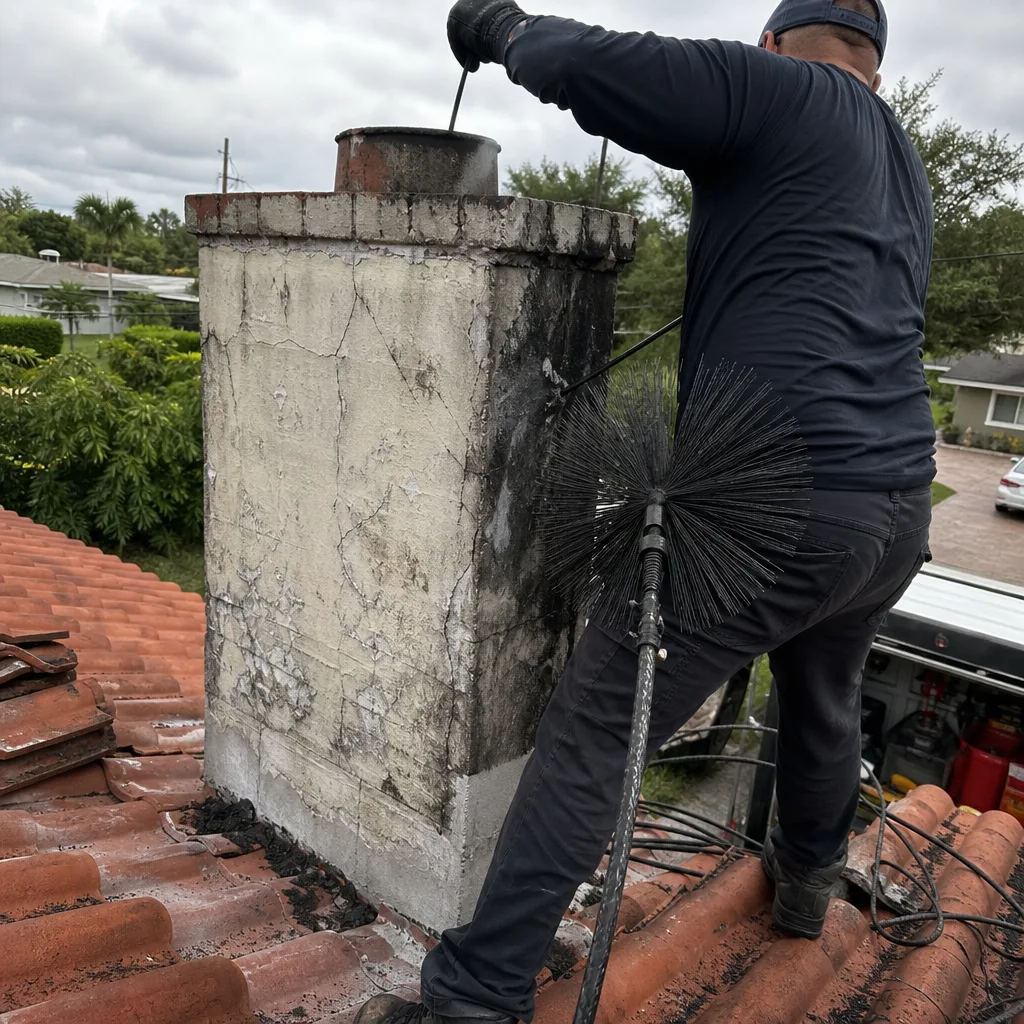 Before
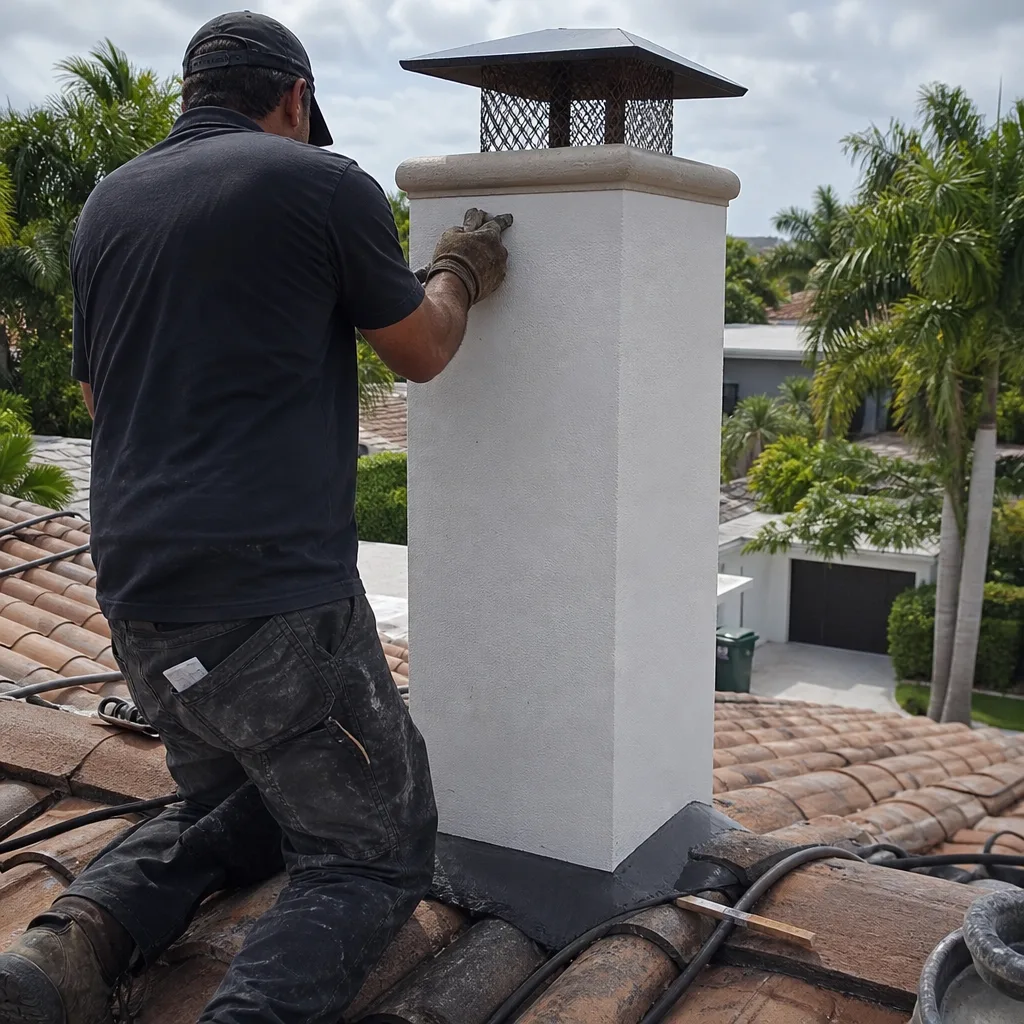 After
After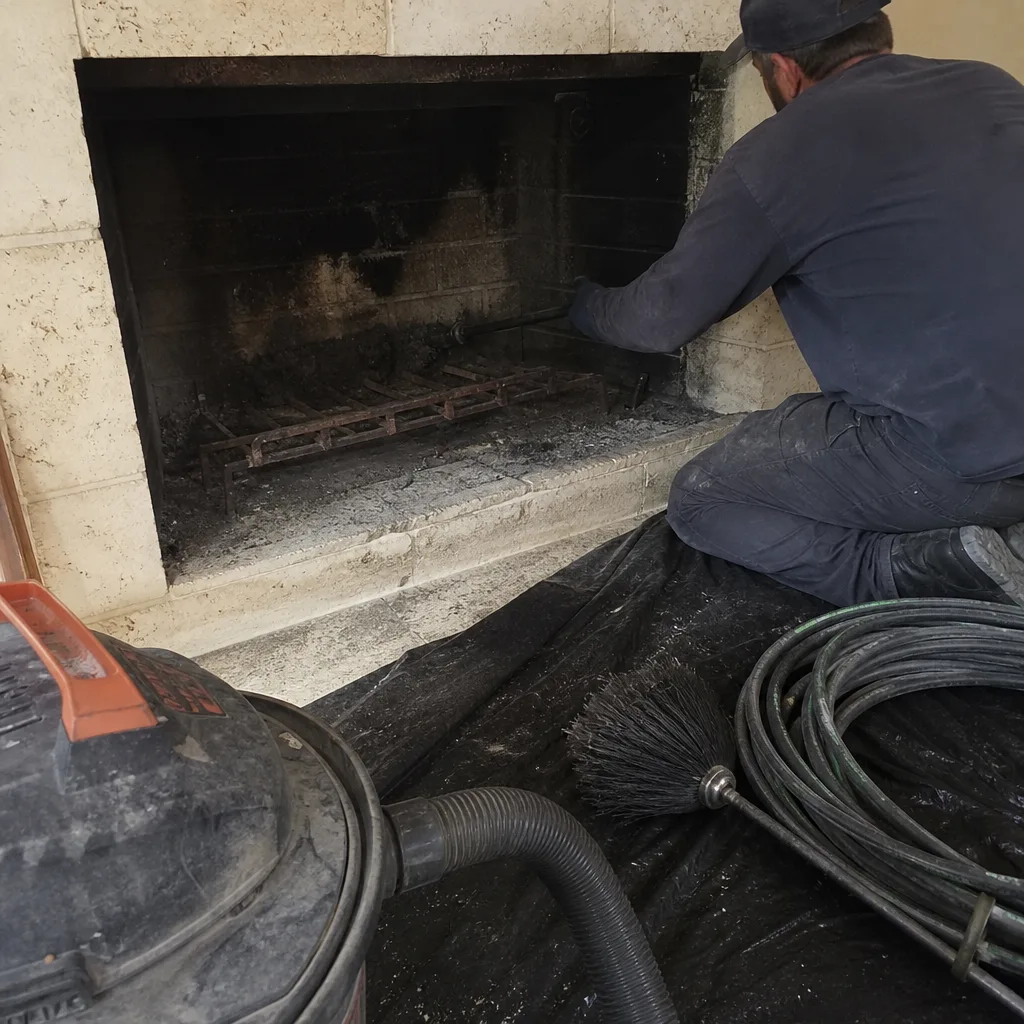 Before
 After
After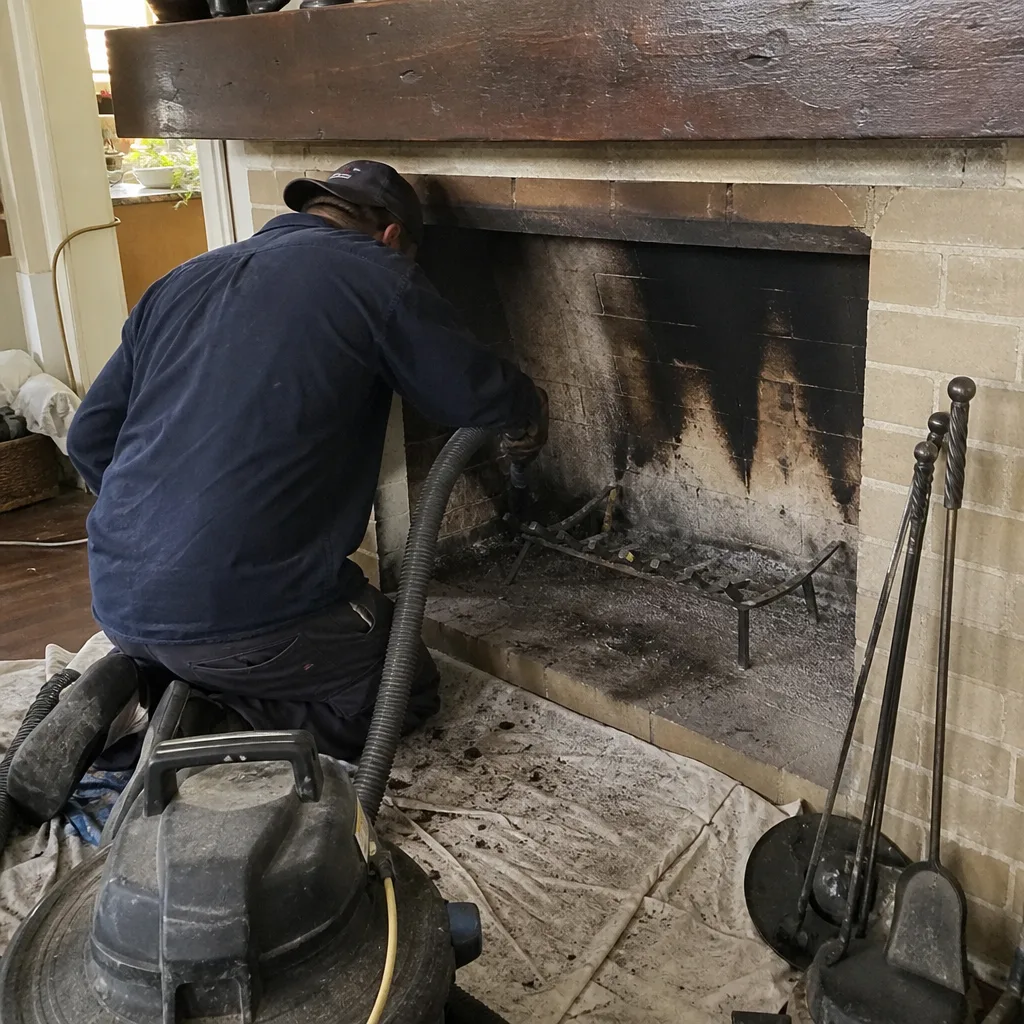 Before
 After
After