
Last updated October 15, 2026
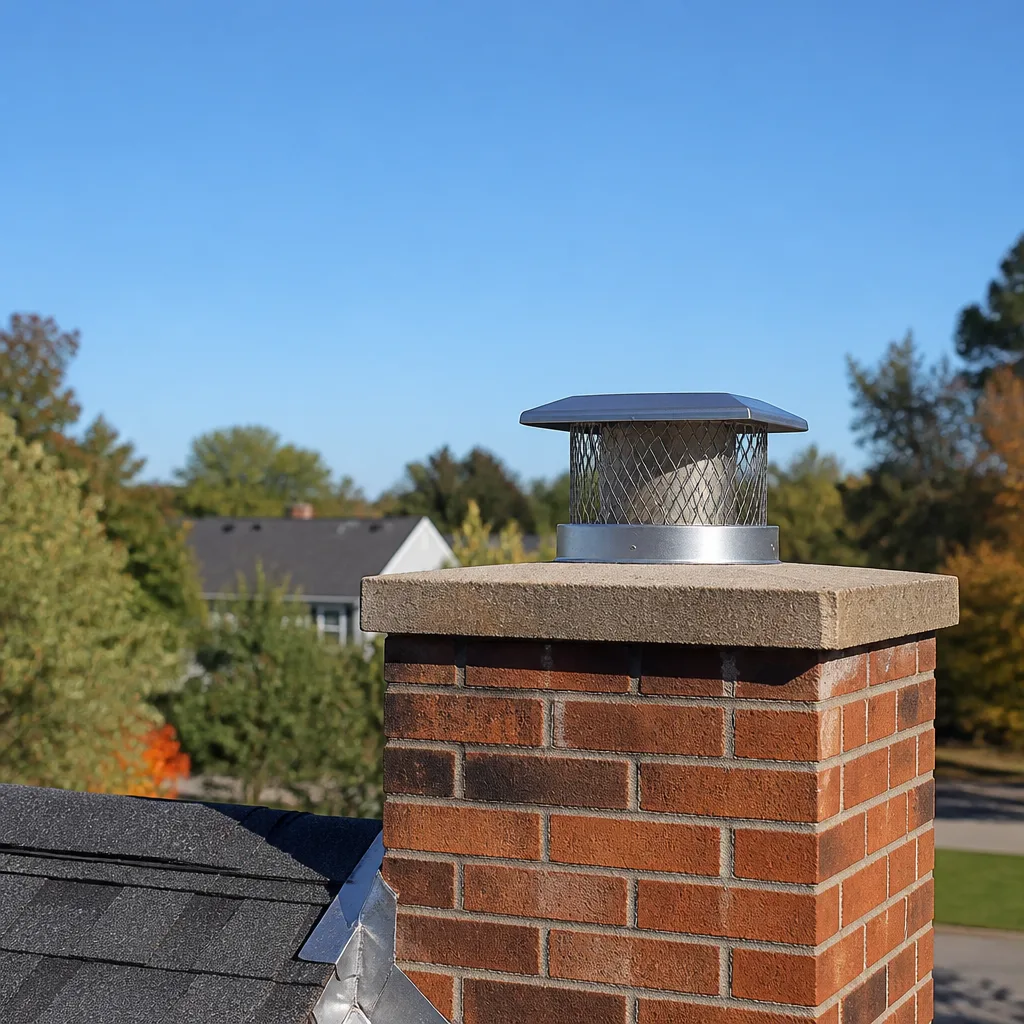 Sweep & inspection
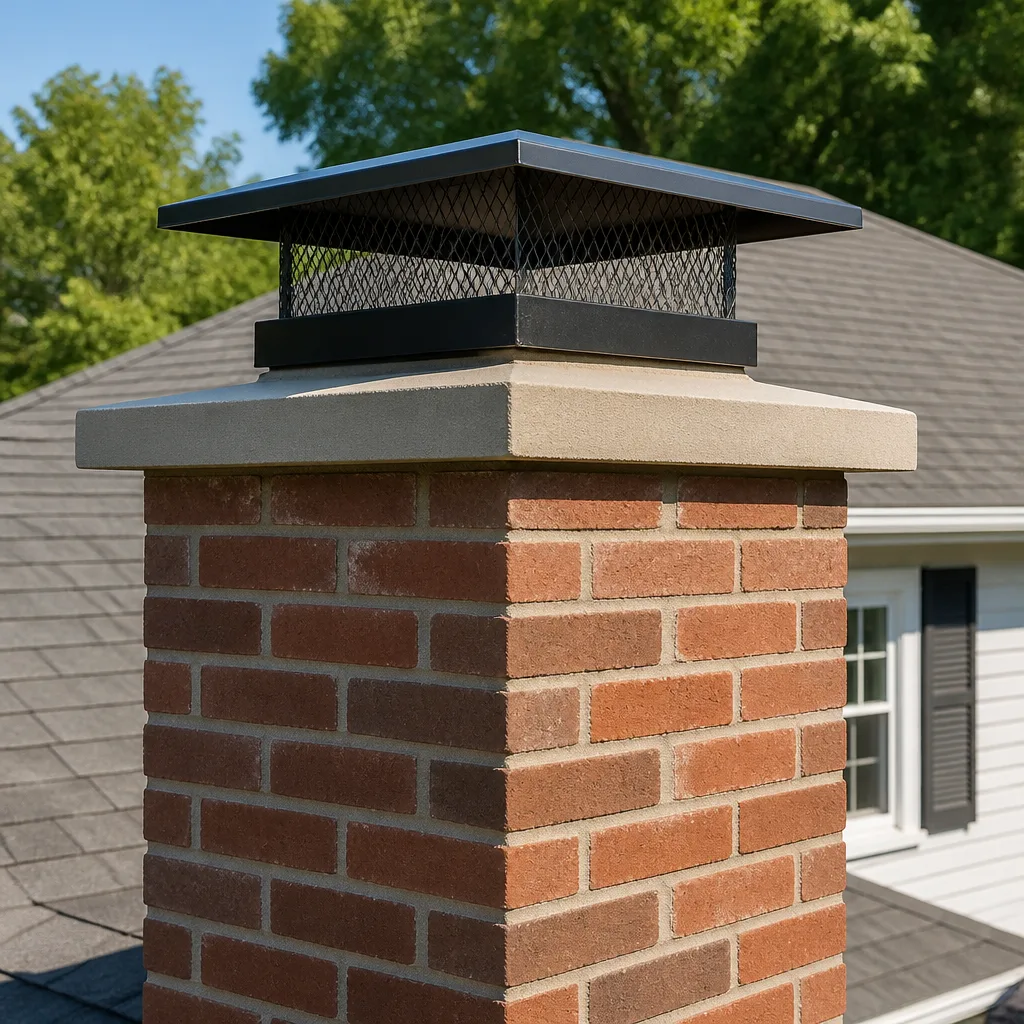 Caps & crowns
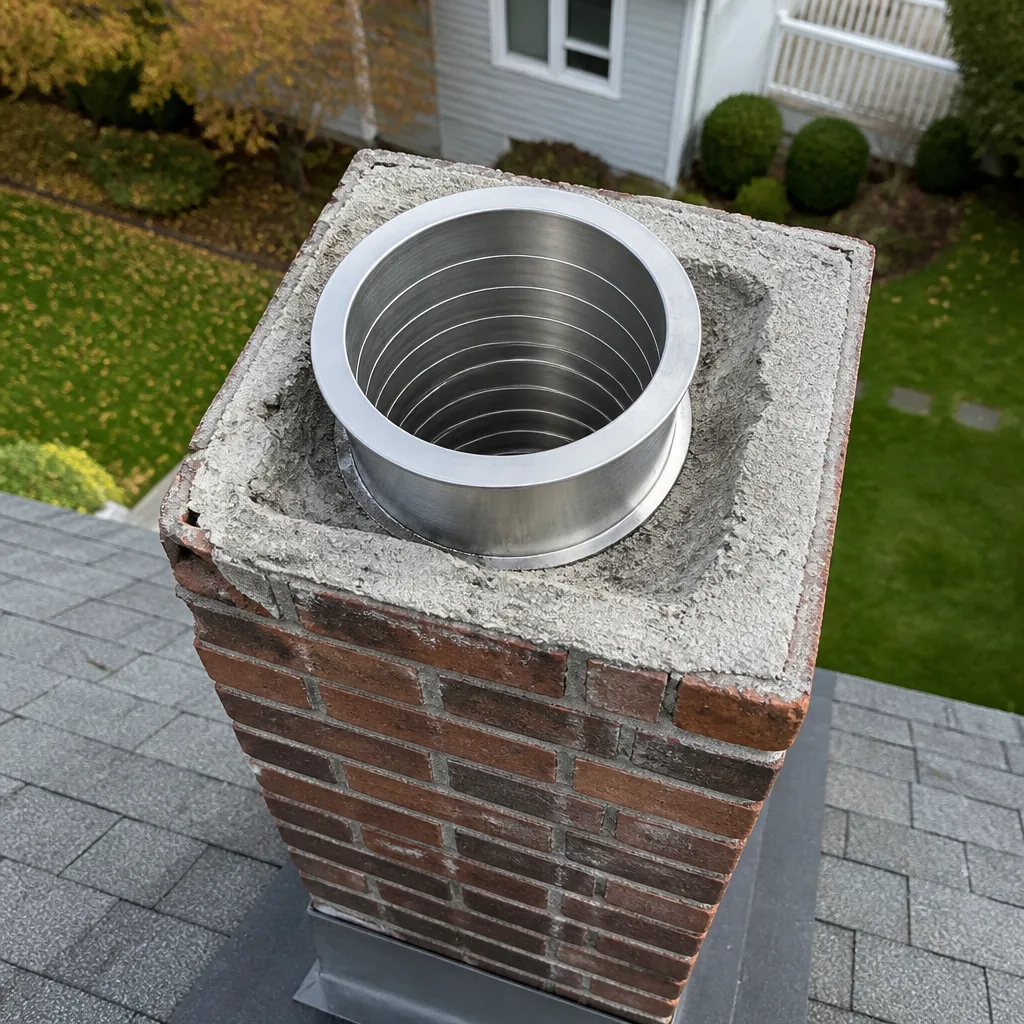 Flue relining
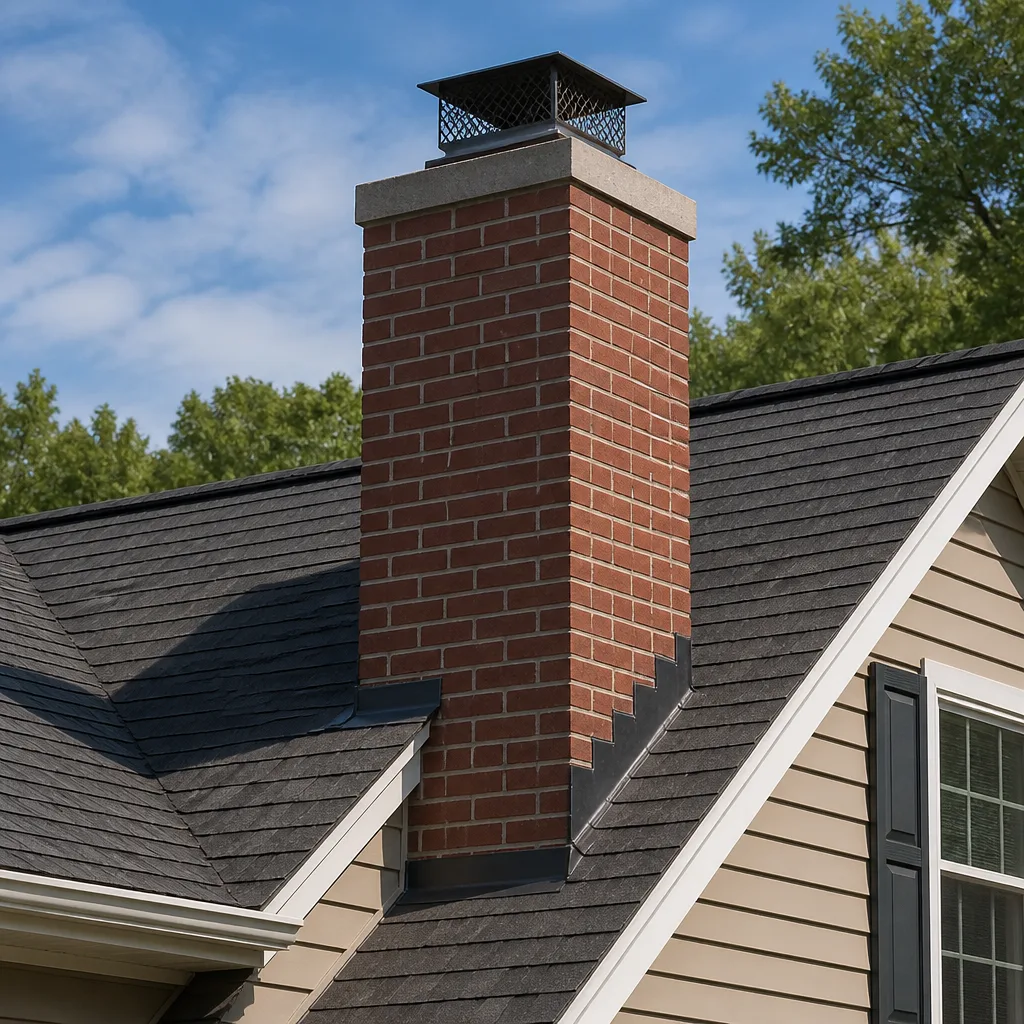 Masonry repair
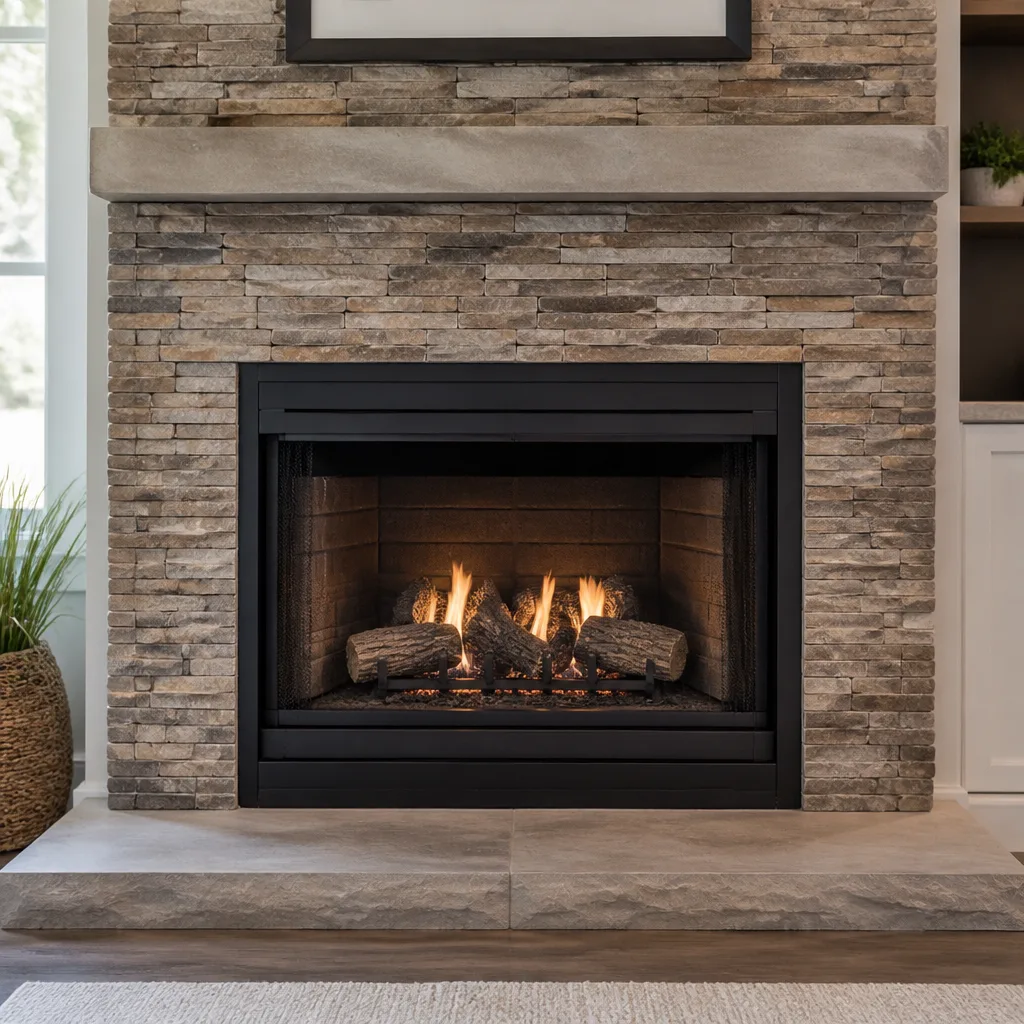 Gas fireplace service
Level 1 sweep and inspection to the NFPA 211 annual standard - flue, crown, cap, and flashing checked and photographed
Chimney sweep logs do not sweep chimneys. They loosen some creosote - which then falls where a brush and vacuum still have to collect it.
How to Hire a Chimney Cleaning Contractor in Miami: A Step-by-Step Guide
After a tropical storm rolls through Miami, the knock on the door starts. A guy in a truck with a magnetic sign offers a $75 chimney cleaning. He spends twenty minutes on the roof, hands over a handwritten receipt with no address, and drives off. The homeowner lights a fire in December and finds out what they actually paid for: nothing. Hiring a chimney contractor in Miami is less about finding the cheapest quote and more about knowing which written documents separate a legitimate company from a door-knocker with a leaf blower. This guide walks through the three documents that matter, the credentials you can verify yourself, and the exact questions to ask before anyone climbs onto your roof. For more guides & resources on protecting your home, see our blog.
Quick Answer
To hire a chimney cleaning contractor in Miami, verify three things before you book: proof of CSIA certification (checkable in under two minutes on the public registry), a written itemized estimate with the full price stated before work begins, and a written guarantee that names the coverage period and what happens if the repair fails. Skip any contractor who won’t put price, scope, and guarantee terms in writing before the job starts.
Styles & brands we work with
Table of Contents
- The Three Credentials a Miami Chimney Contractor Must Carry
- Why a Written Estimate Is the Single Biggest Differentiator
- What a Guarantee Should Actually Say in Writing
- How to Verify a CSIA Certification Number in Under Two Minutes
- Red Flags Specific to Miami’s Post-Storm Solicitation Patterns
- What a Chimney Sweep in Miami Should Cost
- The 10 Questions to Ask Before You Book
- Chimney Sweep vs. Chimney Inspection: What You’re Actually Paying For
The Three Credentials a Miami Chimney Contractor Must Carry
Miami’s chimney trade draws operators from across South Florida, and the barrier to entry is low: a ladder, a brush, and a Craigslist ad. But a legitimate chimney company in Miami carries three documents you can ask to see before the job is booked. These are not optional paperwork. They’re the difference between a company that returns your call and one that vanishes when the liner fails.
The first is CSIA certification. The Chimney Safety Institute of America is the trade’s national certifying body, and a CSIA-certified sweep has passed a written exam on chimney science, code, and inspection standards. The credential comes with a number you can verify independently, which means the company can’t just stamp “certified” on a business card and hope you won’t check.
The second is a Florida contractor license or a documented exemption. Florida operates a specific set of rules around chimney work, covered in our guide to Chimney Cleaning Permits, Codes & Inspections in FL: What You Need to Know, and a legitimate operator in Miami can produce either a state contractor’s license or the exemption documentation that covers their specific scope. If a company hesitates when you ask for a license number, that’s not a scheduling inconvenience, it’s a red flag.
The third is liability insurance with the homeowner named as an additional insured. This matters in Miami because of roof access: a worker on your tile or shingle roof is on your property, and if they slip, the question of who pays should never be open. A contractor who carries proper insurance can provide a certificate, often within the same day, showing you as additionally insured on their policy.
We keep all three documents available to any Miami homeowner who asks. Asking to see them takes five minutes. A legitimate company expects the question and answers it without friction. A door-knocker changes the subject.
Key Takeaways: Credential Check
- CSIA certification with a verifiable number on the public registry
- Florida contractor license or exemption documentation that matches the scope of work
- Liability insurance with you named as additional insured, not just a verbal promise
Why a Written Estimate Is the Single Biggest Differentiator
In our experience across Miami, the moment a homeowner asks for the price in writing is the moment they find out what kind of company they’re dealing with. A legitimate chimney contractor puts the number on paper before a tool comes off the truck. Every job at Flint Chimney Co Miami home gets a written price before any work starts. That’s not a courtesy. It’s a discipline.
The written estimate matters because chimney work has layers. A basic sweep is one number. A sweep plus a Level 2 inspection is another. Repair work, if the inspection finds it, is a third conversation. Without an itemized document, a homeowner has no way to know whether the $149 quote becomes $1,400 once the technician is on the roof and “sees something.”
A written estimate should include the scope of work, the materials being used if any, the price for each line item, and the date. It should have the company’s name, address, and phone number printed on it. If the estimate arrives on a scrap of paper with no address, or if the contractor says they’ll “write something up after,” that’s the same thing as no estimate at all.
Miami’s housing stock is varied: 1950s Coral Gables ranches, 1980s Kendall two-stories, modern builds in Doral. Each type has different flue configurations and access challenges. A written estimate shows the contractor has thought about your actual chimney, not a generic chimney. If you’re comparing bids, the itemized document is the only honest basis for comparison. Two companies can quote $200 for a sweep, and one includes the inspection camera footage while the other doesn’t own a camera.
Here’s the practical test: tell the contractor you want the price in writing before you approve any work. If they agree without resistance, you’re dealing with someone who runs a business. If they push back, reschedule without a date, or say they’ll “have their guy call you,” end the conversation. A real operation in Miami can produce a written estimate on the spot or within the hour. No exceptions.
What a Guarantee Should Actually Say in Writing
A guarantee is not a sentence spoken over the phone. A guarantee is a document with terms. And in Miami, where the humidity and salt air put real stress on masonry and metal components, the terms matter. A chimney repair that fails six months later because the contractor used the wrong mortar mix is a Miami problem, not a Vermont problem. The material has to hold up to moisture, heat, and coastal air.
Here’s what a written guarantee should state, in plain language:
- The coverage period. How long is the repair covered? One year is a reasonable floor. Anything less, and you’re testing the contractor’s confidence in their own work. Our Chimney Repair in Miami work carries a written guarantee valid for one full year from the service date, a commitment we call the 365-Day Done Right Promise.
- What triggers a callback. The guarantee should specify which conditions count as a covered failure: mortar spalling, liner separation, water entry through the repair zone. If the words are vague (“we’ll make it right”), the burden of interpretation falls on you.
- Who pays for what. A complete guarantee states that if a covered repair fails within the period, the contractor returns at no charge to you. Parts and labor are both covered. No fine print about “diagnostic fees” or “minimum trip charges.”
- What’s excluded. Every guarantee excludes something, and that’s honest. But the exclusions should be named: damage from a chimney fire, structural movement of the house, work done by another contractor after the original repair. A contract that says “exclusions apply” without naming them is not a contract.
- How to claim it. A real guarantee tells you the number to call and the timeframe in which the company commits to respond. Not “when we get around to it.” A promise.
Put this in perspective: if a contractor won’t write down the guarantee, the guarantee doesn’t exist. The document is the thing you can hold, reference, and enforce. In Miami, where chimney work can hit four figures when a liner is involved, a written one-year guarantee is the standard you should require.
The company you hire should operate under a code that covers every location and every technician. We work under The Garrison Standard, the same operating code every Garrison Partners location follows: price in writing before work starts, background-checked technicians in uniform, and a guarantee you can hold in your hand. If a company can’t name its standard, it doesn’t have one.
How to Verify a CSIA Certification Number in Under Two Minutes
Checking a CSIA certification number is faster than checking Miami traffic before you leave the house. Here’s the exact sequence:
- Get the number. Ask the contractor for their CSIA certification number. A legitimate company gives it to you without pause. If they say “it’s in the truck” or “I’ll text it later,” that’s the first sign the number may not exist.
- Go to the CSIA website. The Chimney Safety Institute of America maintains a public directory of certified sweeps. You don’t need a login and you don’t need to provide your email.
- Search by name or company. Enter the technician’s name or the company name exactly as it was given to you. The registry returns certification status.
- Match the details. Confirm that the name on the certification matches the person standing at your door or the owner of the company. If the technician is certified but the company owner is not, that’s worth understanding: the certified individual should be the one performing or directly supervising the work.
- Check the status. Certification is not lifetime. The registry shows whether the credential is current. If it lapsed in 2019, that’s not a certification, that’s a memory.
Two minutes. That’s the whole process. In Miami, where post-storm solicitation brings out operators using borrowed or invented credentials, the two-minute check is the difference between hiring a trained professional and funding a hobbyist.
We’re part of the Garrison Partners family, founded in 2002. Our technicians are background-checked and uniformed. Ask us for a CSIA number and you’ll have it before you hang up the phone. That’s not a special favor. That’s how the trade should operate.
Red Flags Specific to Miami’s Post-Storm Solicitation Patterns
Miami has a pattern that doesn’t exist in Kansas City or Boise. After a storm, the solicitors appear. They walk neighborhoods in Goulds, Cutler Bay, and Westchester, offering cut-rate chimney work because they know homeowners are already looking at roof damage and water stains. The chimney becomes the entry point for a broader scope of scare-sell “repairs.” Here are the red flags specific to this pattern:
- Door-to-door offers after a storm. Legitimate chimney companies in Miami book by phone and internet. A contractor knocking on your door the week after a hurricane is not running a chimney business. He’s running a route.
- Cash-only pricing. A company that deals only in cash has no paper trail. No paper trail means no written estimate, no written guarantee, and no way to prove the work ever happened.
- No written guarantee mentioned at all. If the word “guarantee” never comes up, or if it comes up as “we stand behind our work” without a document, the conversation is over.
- The receipt has no address. A handwritten receipt with a first name and a phone number is not a business. It’s a phone number. If the company has no physical address in Miami or South Florida, you have no recourse when the work fails.
- They “found” a problem within five minutes of arrival. An honest chimney technician needs to inspect before making any claim. A contractor who spots a cracked liner from the driveway is selling a narrative, not a diagnosis.
- Pressure to sign the same day. A legitimate company gives you the written estimate and lets you think about it. We give you the price, the scope, and the guarantee terms in writing, and then we let you decide. No clock, no countdown, no “the price goes up tomorrow.”
The discipline matters because a chimney is a safety system. It vents combustion gases and withstands fire. A bad cleaning is an inconvenience. A bad diagnosis that leaves a damaged flue in place is a hazard that waits until the first cold night of January.
What a Chimney Sweep in Miami Should Cost
Chimney sweep pricing in Miami runs between $189 and $395 for a standard cleaning of an open fireplace. See our Chimney Cleaning Cost Breakdown: The Miami Homeowner’s Reference for 2026 for full details. The range reflects the size of the flue, the amount of buildup, the accessibility of the roof, and whether the chimney has a cap that needs removal and reseating. A gas fireplace insert sweep tends toward the lower end; a wood-burning fireplace with years of creosote runs toward the higher end.
Here’s the line-item breakdown most Miami homeowners can expect:
- Standard chimney sweep: $189 – $329
- Chimney sweep with camera inspection (Level 2): $375 – $595
- Chimney cap replacement (if needed): $120 – $400 depending on material: stainless steel vs. copper
- Flue relining (replacing the inner liner that channels smoke safely out of the house): $2,500 – $6,000 depending on flue length and liner type
- Full masonry crown rebuild: $1,200 – $3,200
These are Miami market ranges, not national averages. The humidity and coastal exposure mean faster mortar decay and more corrosion on caps and dampers, so replacement components come up more often here than in drier climates. A sweep priced at $79 should make you stop and think. At that number, the operator isn’t covering insurance, training, or time. They’re running volume, and volume is how corners get cut.
For a chimney sweep alone, no one should charge you $1,000. For a full reline, no one should quote you $500. Knowing the range protects you from both the lowball and the overcharge. And remember: the price on the written estimate is the price on the invoice. If it isn’t, you didn’t have the right document in the first place.
The 10 Questions to Ask Before You Book
Here’s the full vetting sequence, in order. These are the questions that make a legitimate Miami chimney company nod and a door-knocker start backpedaling:
- What’s your CSIA certification number? Write it down. Verify it. Two minutes.
- Are you licensed or exempt under Florida law, and can I see the documentation? A legitimate company produces it.
- Will you name me as additionally insured on your liability policy? If the answer is “you don’t need that,” you need a different contractor.
- Can I get the price in writing before any work starts? Yes means yes. A delay means no.
- What does your guarantee cover, for how long, and what happens if the repair fails? The answer should be a document, not a handshake.
- Who performs the work: an employee or a subcontractor? You want to know whose name is on the certification and who is accountable if something goes wrong.
- Do you use a camera during the inspection? A company that inspects without camera footage is guessing. If they find damage, they should show you the images. Nothing gets recommended without visual evidence you can see for yourself.
- What materials do you install on repairs? A real company names brands: Chimney Inspection in Miami work should specify professional-grade materials like DuraFlex, HeatShield, or Copperfield, chosen for the job, not for the margin.
- How do you handle access to the roof in Miami’s climate? Roof access in South Florida means tile work, hot surfaces, and UV-brittle materials. A professional has a process. A fly-by-night has a ladder and hope.
- What’s your physical address in Miami or South Florida? No address, no hire. It’s that simple.
Ten questions. Five minutes on the phone. That’s the entire vetting process. A legitimate company answers all ten without pause. We answer all ten, every time, because the answers are facts: we’re part of Garrison Partners, founded in 2002, and we operate under The Garrison Standard with written pricing and a 365-Day Done Right Promise on every repair we perform.
Chimney Sweep vs. Chimney Inspection: What You’re Actually Paying For
A chimney sweep is a cleaning. A chimney inspection is a diagnosis. They are different services, and a Miami homeowner who understands the distinction won’t be upsold into one or talked out of the other.
A sweep removes the creosote and soot that build up on the flue walls. Creosote is flammable; if it builds to a quarter-inch or more, it’s a chimney fire waiting for the right set of conditions. In Miami’s humid air, creosote can also take on a sticky, tar-like consistency that adheres harder and needs more mechanical effort to remove, which is why Seasonal Chimney Cleaning Care for Miami: Year-Round Homeowner’s Guide matters for timing your maintenance. A proper sweep uses brushes sized to the flue, not a single off-the-shelf brush the technician found at a hardware store in Hialeah.
An inspection goes further. A Level 1 inspection is what accompanies a routine sweep when nothing has changed about the system. A Level 2 inspection uses camera equipment to examine the interior of the flue, the condition of the clay tiles or liner material, the mortar joints, and the areas where deterioration is common. A Level 2 is called for when a property changes hands, when a storm may have damaged the chimney, or when the homeowner has used the fireplace heavily without a sweep in years.
Here’s the plain-language difference: the sweep makes the chimney safe to use right now. The inspection tells you whether the chimney is safe to use at all. A company that only sweeps and never inspects is leaving money off the table, but more importantly, it’s leaving you without the information that actually matters. A compromised flue liner is not fixed by brushing.
If a company insists you need an inspection but won’t show you camera footage, walk away. If a company says the camera “isn’t working today” and tries to sell you a liner replacement based on a visual from the roof, walk faster. We include camera inspection and photo documentation on every inspection we perform in Miami. You see what we see. If the liner is fine, we tell you it’s fine and we give you the sweep you came for. If it’s damaged, you’ll see the image and make the decision with evidence in front of you.
Common Mistakes to Avoid
- Booking the first company that returns your call. Miami has dozens of chimney companies, and the first call back is not a signal of quality. Run the credential check before you book, not after.
- Approving work without a written estimate. A verbal number is not a quote. If the price isn’t on paper before the work starts, you’re negotiating from a position of no leverage.
- Accepting “it’s covered” as a guarantee. A guarantee is a document with dates, conditions, and a phone number. A sentence spoken over the phone is just air.
- Skipping the insurance verification. A contractor without liability insurance is a lawsuit waiting for a slip on your roof. Ask for the certificate with your name on it.
- Hiring a storm-chaser because they’re available today. The contractor who can start immediately after a hurricane is available for a reason. Legitimate companies book out.
- Paying cash upfront for materials. A contractor who needs cash upfront for a liner is either running on zero operating capital or planning not to return. Written pricing, payment on completion, that’s the standard.
- Ignoring chimney cap damage. In Miami, the cap is the first line of defense against rain, iguanas, and nesting birds. A company that sweeps without checking the cap hasn’t finished the job.
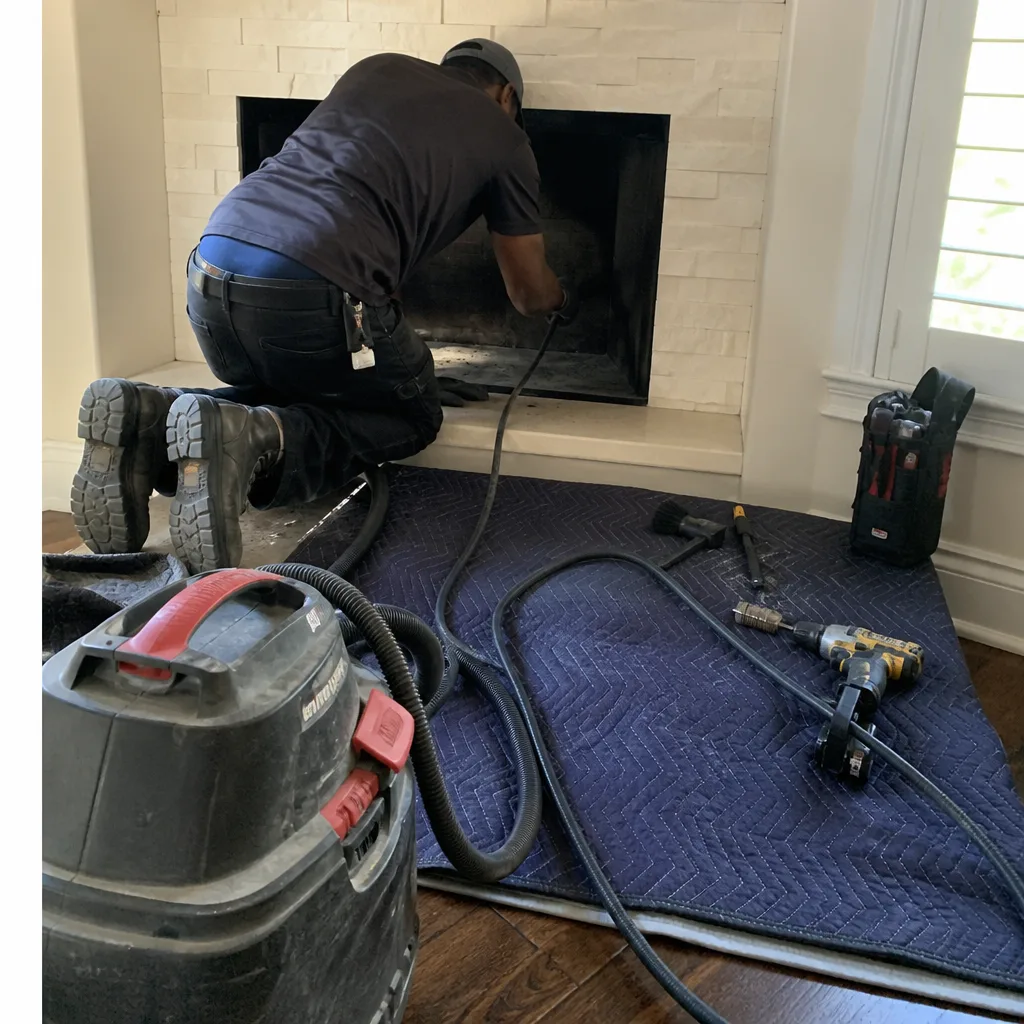
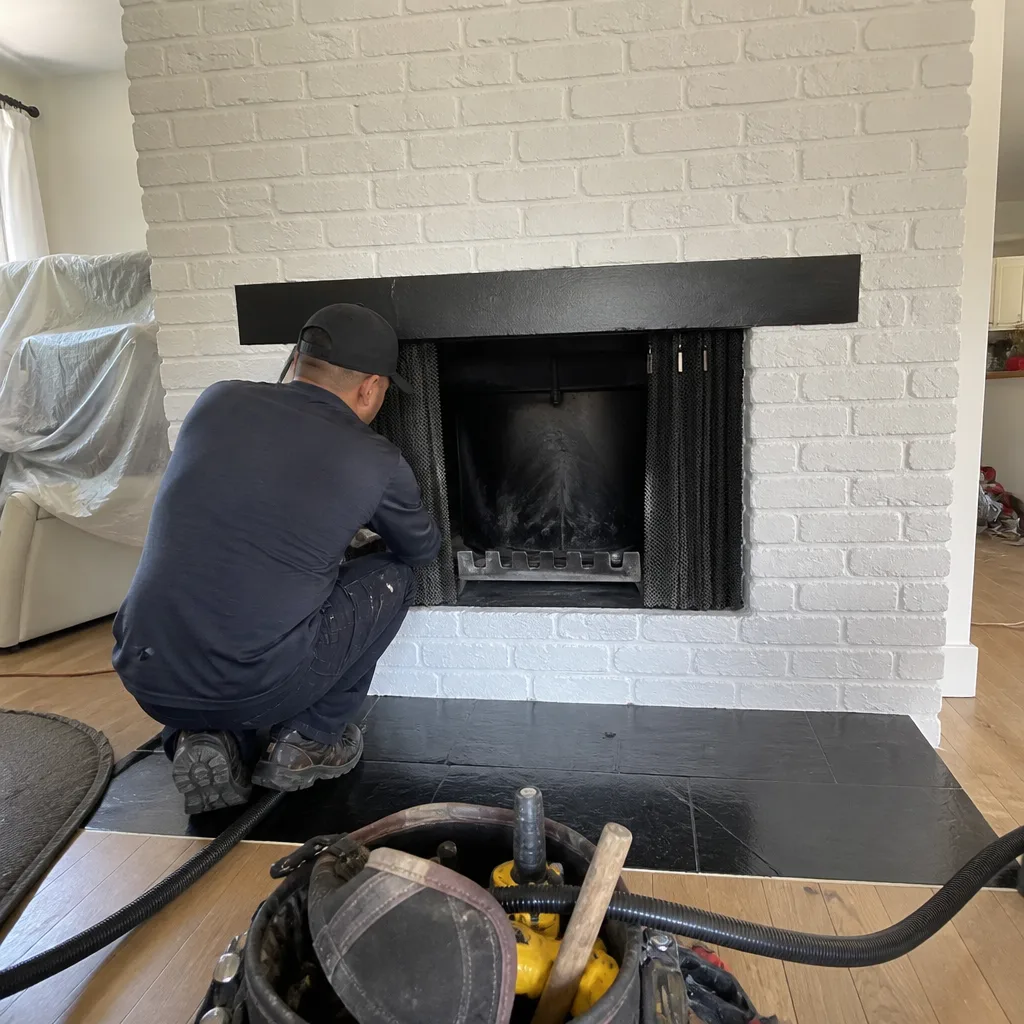
See the difference
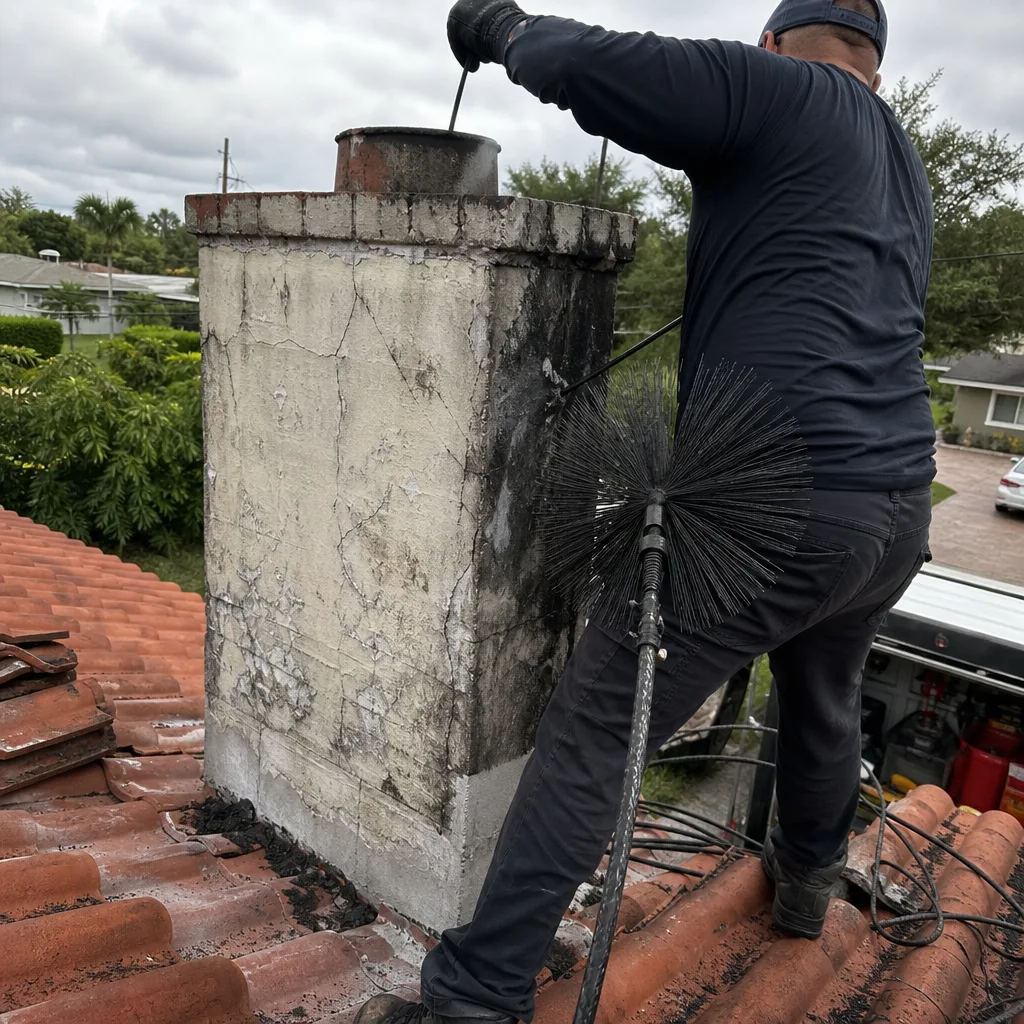 Before
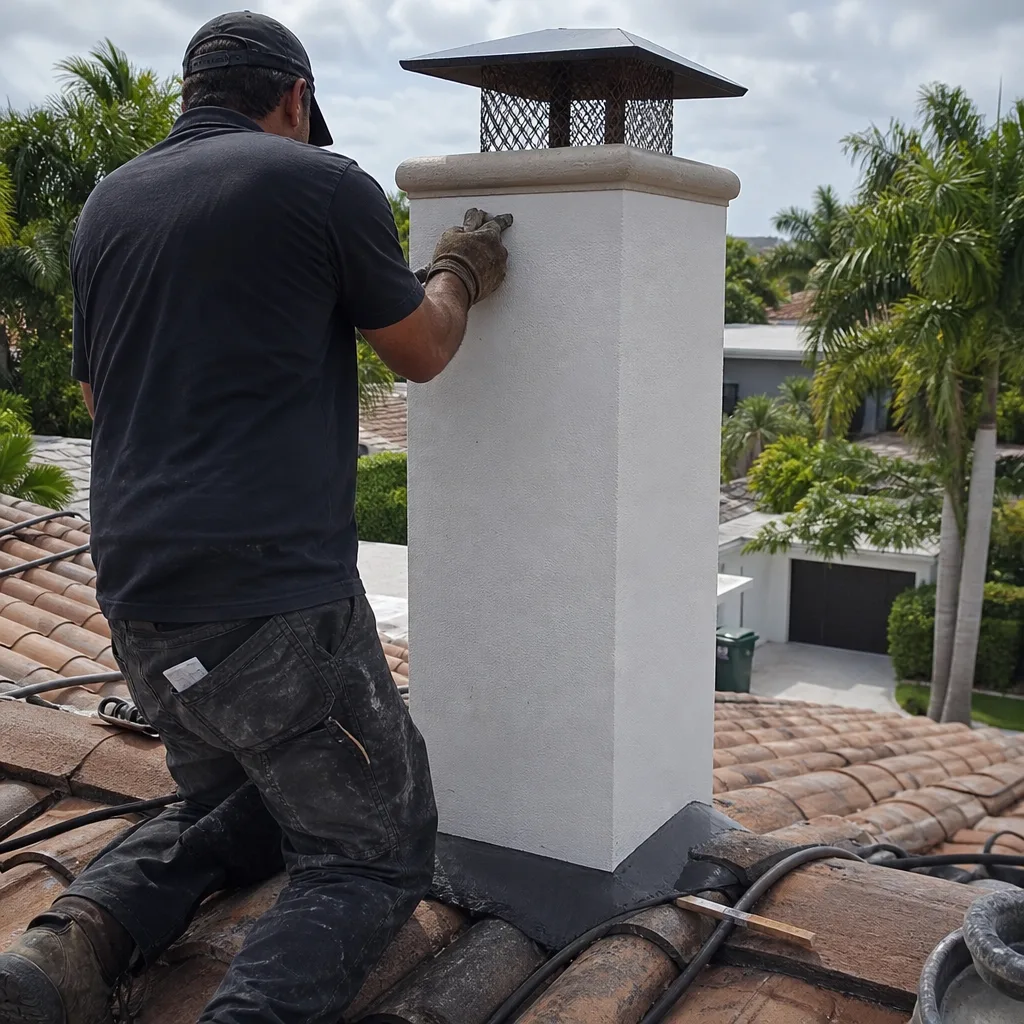 After
After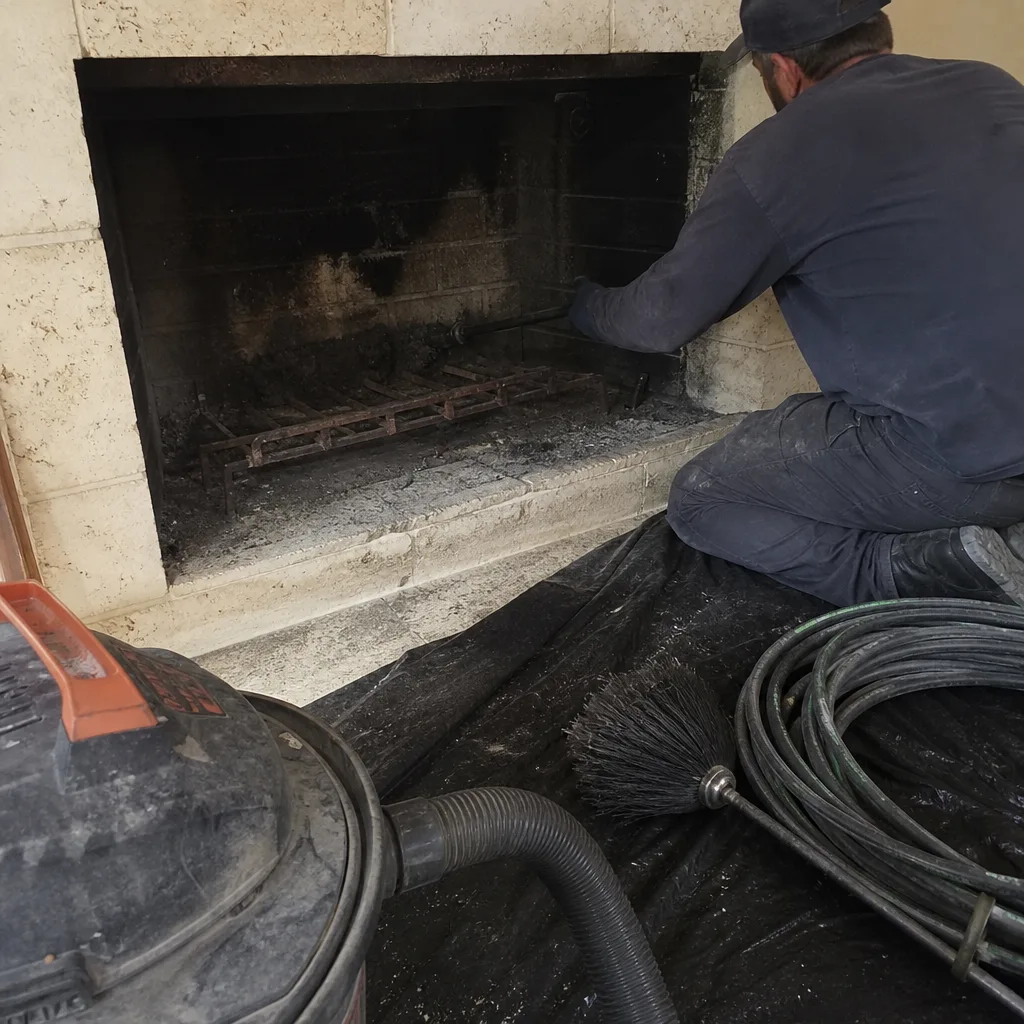 Before
 After
After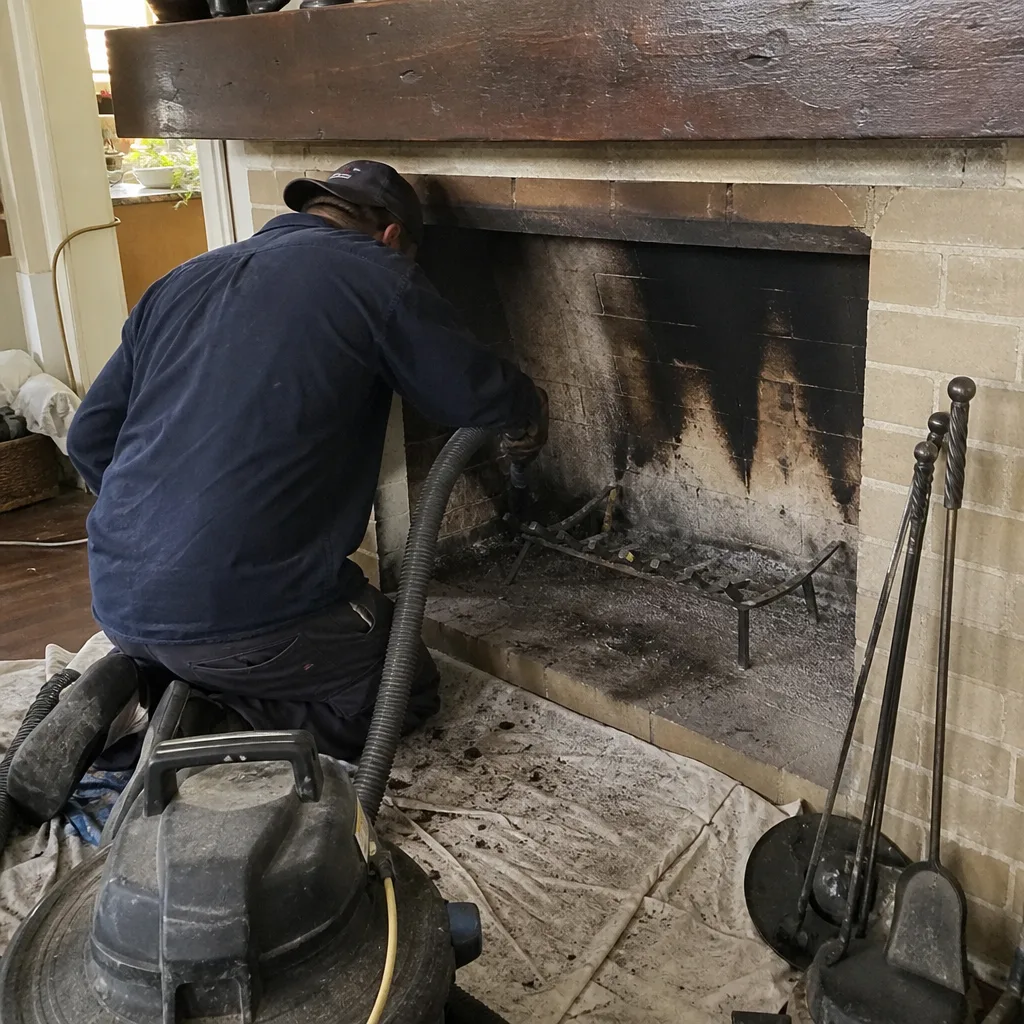 Before
 After
AfterWhen to Call a Professional
Call a chimney professional when you smell smoke inside the house after the fire is lit, when you can see dark buildup on the flue walls with a flashlight, when water is staining the ceiling around the chimney chase, or when it’s been more than a year since the last sweep. High-tension chimney components and rooftop access are not DIY territory, and a trained technician brings equipment and safety procedures that a ladder from the garage does not replace. If you’re unsure whether the chimney is safe to use, the answer is to have it inspected, not to light a fire and hope. Chimney Sweep in Miami with Flint Chimney Co Miami includes a written price before work starts and a live person on the phone when you call. Call (786) 305-7861 for a free estimate in Miami.
Frequently Asked Questions
A standard chimney sweep in Miami runs between $189 and $329 for most single-flue fireplaces, with the price depending on flue size, creosote buildup, and roof accessibility. Call (786) 305-7861 for an exact written quote. Estimates are free and the price is put in writing before any work starts.
You need a new liner only if inspection shows cracks, gaps, or separation in the existing flue, and a legitimate Miami chimney company will show you the camera footage before recommending replacement. If a contractor recommends a liner based on a visual from the roof, get a second opinion. If the camera shows the damage, the decision is evidence-based, not speculative.
The CSIA recommends a sweep after every cord of wood burned or at least once per year, whichever comes first. In Miami, where fireplaces are used seasonally, an annual sweep before the first winter fire is the practical standard.
Creosote builds up on the flue walls, and at a quarter-inch thickness it becomes a fire hazard. A chimney fire can crack the liner, damage the masonry, and spread to the house structure. Skipping a sweep is rolling the dice on a known risk.
Most homeowners policies in Florida cover chimney damage from sudden events like storms, but they do not cover neglect-based damage from skipped maintenance. Your insurer expects an annual sweep record. A chimney fire caused by ignored creosote buildup is often denied.
Ask for the CSIA certification number and verify it on the public registry, ask for written proof of insurance with you named, and require a written estimate and written guarantee before any work begins. A legitimate company answers all three requests without friction. Call (786) 305-7861 to speak with a live person and get a free estimate.
The Bottom Line
Hiring a chimney contractor in Miami comes down to three documents: proof of certification, a written itemized estimate, and a written guarantee with a named coverage period and a free return visit if the repair fails. Everything else is conversation. A company that puts price, scope, and guarantee terms in writing before the work starts is a company you can hold accountable. A company that won’t is a company you can’t. Verify the credentials, check the CSIA number, demand the paperwork, and then make the call. The chimney is a safety system. Treat the hiring process with the same discipline.
Written by Hank Delano, Owner at Flint Chimney Co Miami, serving Miami since 2002.